

The impact of keeping cups in circulation
Reuse only delivers its potential when products are returned and used again. Here is what the evidence tells us, what BORRO is achieving in practice, and how organisations can measure the results.
BORRO is designed around a simple idea
Keep one cup in use for longer, rather than replacing it with another single-use cup after every drink.
That means the impact of BORRO depends not just on putting reusable cups into circulation, but on returning, washing and reusing them again and again.

USE 1 → USE 2 → USE 3 → every reuse after this increases the benefit
FSG's lifecycle assessment, carried out with Nottingham Trent University, found that under the conditions modelled, the environmental impact of an FSG reusable cup falls below that of the equivalent single-use option after approximately three uses.
Every successful reuse after that increases the environmental benefit within the conditions assessed.
What determines the impact of a reuse scheme?
-
![]()
Number of reuses
Repeated use spreads the environmental cost of manufacturing across more drinks.
-
![]()
Washing and transport
How cups are cleaned and moved affects overall environmental performance.
-
![]()
Return rate
More cups coming back means more opportunities for reuse.
-
![]()
Replacement and loss
Keeping products in circulation for longer matters.



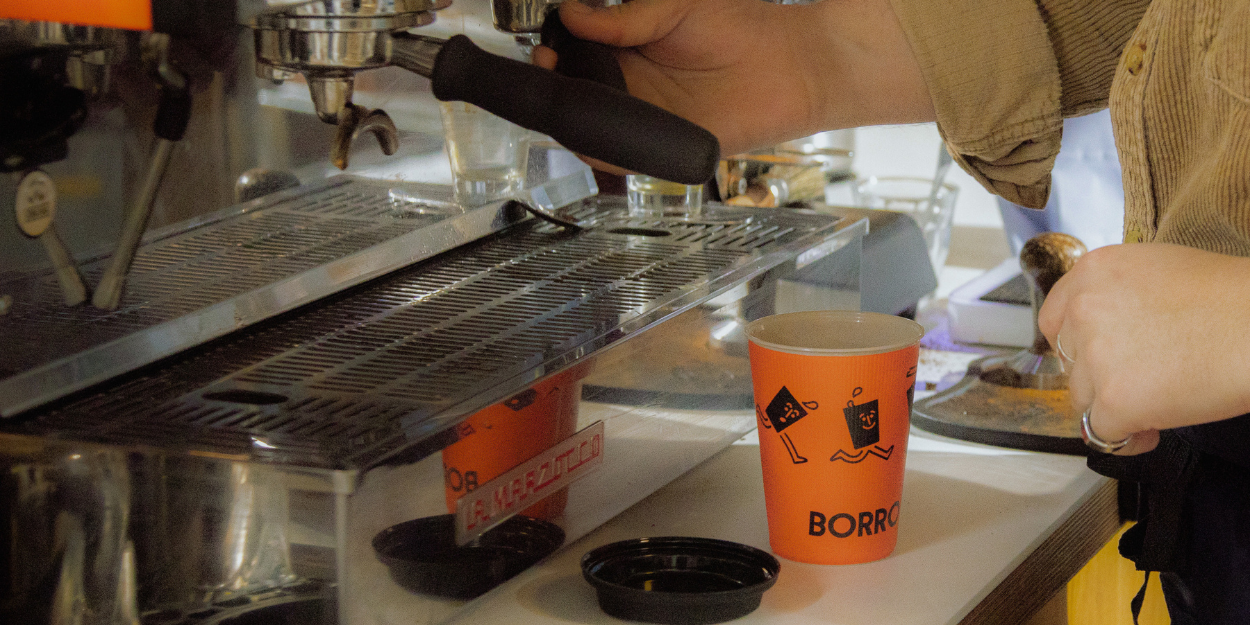
78,000+ single-use items avoided in 5 months
Since introducing BORRO in February 2026, The Shrewsbury and Telford Hospital NHS Trust has avoided 27,500 12oz disposable cups, 11,600 16oz disposable cups and 39,100 disposable lids.
That adds up to more than 78,000 single-use items avoided in the first 5 months of the scheme.
What can you measure?
-
![]()
Waste Reduced
The quantity of packaging removed from the waste stream
-
![]()
Environmental impact
Relevant environmental outcomes where robust data allows them to be calculated
-
![]()
Financial Savings
Changes in recurring disposable packaging costs
-
![]()
Return and loss rates
Whether cups are staying within the system
-
![]()
Cups reused
How many single use items are displaced through reuse
-
![]()
Single-use avoided
The volume of disposable packaging no longer required




Questions organisations often ask about reuse
-
The environmental break-even point depends on factors such as how the cup is washed and transported, how often it is returned and reused, and the end-of-life treatment of both reusable and single-use cups. However, FSG’s Lifecycle Assessment, carried out with Nottingham Trent University, found that an FSG reusable cup becomes more environmentally sustainable than the single-use alternative after just 3 uses.
From that point onwards, the environmental benefit increases with every additional reuse. The key is therefore to keep BORRO cups circulating and being returned and reused as many times as possible.
-
Reusable does not mean unwashed. Returned BORRO cups go through the agreed washing process before being put back into circulation, with clean and returned stock managed separately.
-
BORRO cups are made from durable polypropylene and are designed specifically for repeated foodservice use. We can provide detailed material and product information to partners who need it for sustainability, procurement or compliance reviews.
-
BORRO cups are designed for repeated use over a long service life. Actual life depends on how the cup is handled, washed and circulated, so BORRO focuses on monitoring reuse and keeping cups in active circulation for as long as they remain fit for use.
Ready to explore reuse?
Whatever your setting, BORRO can be shaped around how people buy, return and reuse.
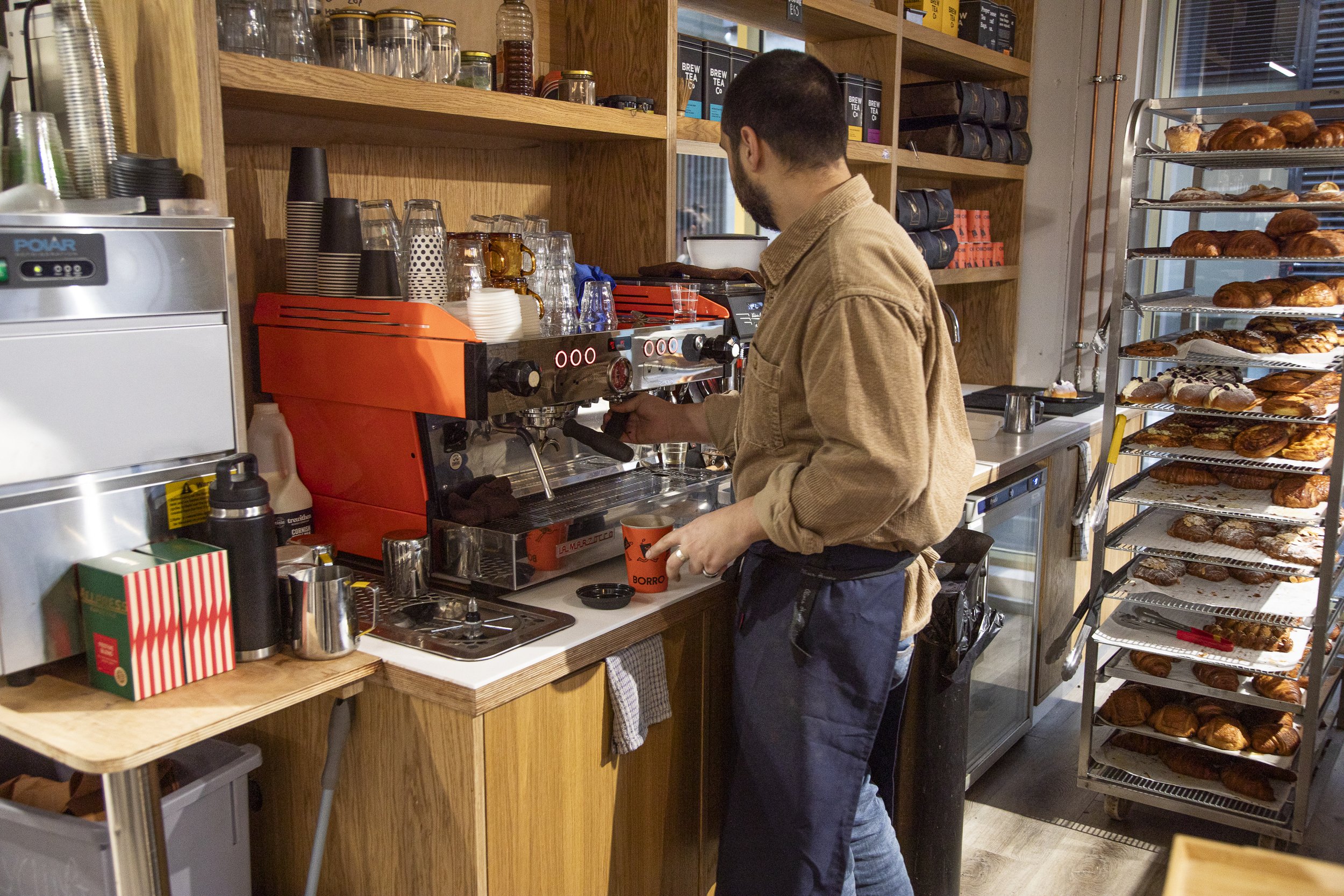

For organisations and communities
Talk to us about bringing BORRO to a workplace, campus, town or wider scheme.
For cafés and businesses
Start with BORRO and see how reuse could work in your venue.
